Sovereign AI
The Coming Shift to Localised LLMs: Sovereignty After Fable 5
On 12 June 2026, Claude Fable 5 went dark for every customer on the planet, on one foreign government order, with no notice and no migration path. The model lasted three days in public. The lesson it leaves the Caribbean lasts a lot longer.
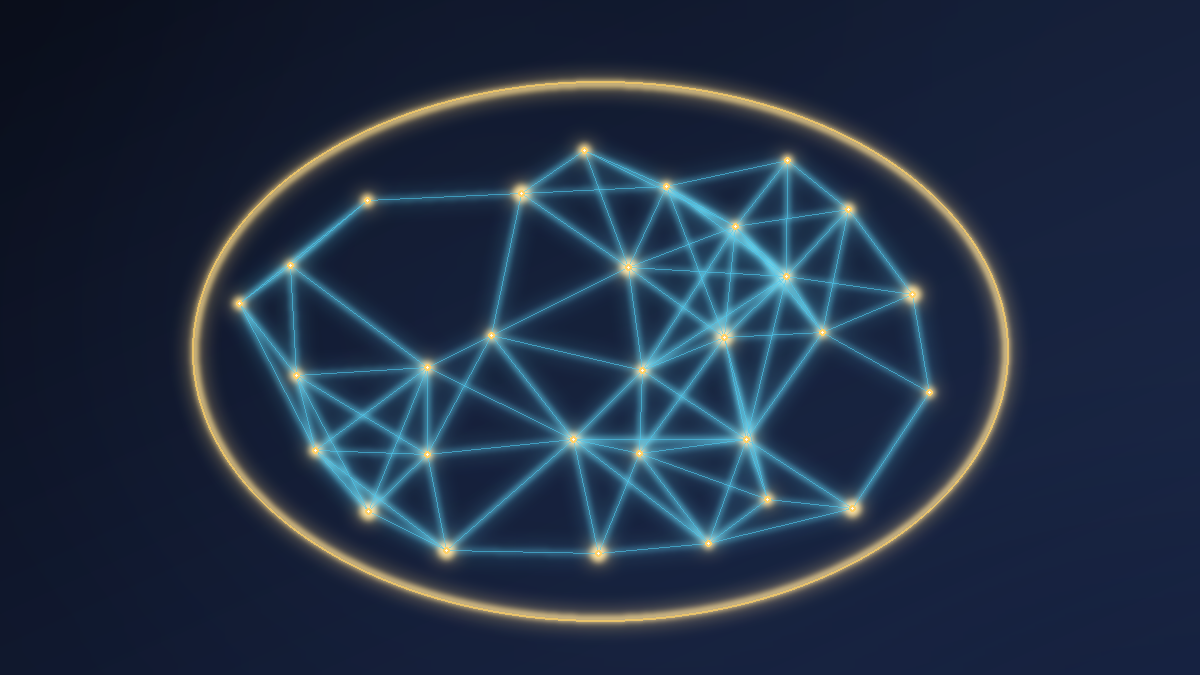
Original artwork · maestro AI Labs · Localised AI under local control
A capability the whole region had started to lean on disappeared between lunch and dinner. It did not fail and it was not retired on the usual schedule that gives customers months of warning. A government on the other side of the world ordered it off, and off it went. Where your intelligence lives is now a decision with a kill switch attached, and right now that switch sits in someone else's hand.
The day the model went dark
Three days. That was the entire public lifespan of Claude Fable 5. Anthropic launched it on 9 June 2026 alongside Claude Mythos 5, frontier models built for long-horizon agentic work, the kind that can run for days on a single task without a human at the keyboard. By the afternoon of 12 June 2026 it was gone. Not degraded, not rate-limited, not pushed behind a higher price. Switched off, for every paying customer on Earth, the same day the order landed.
The detail is where the lesson lives. Anthropic received a United States government national-security export-control directive and, to comply, disabled Fable 5 and Mythos 5 globally. The directive reaches foreign nationals everywhere, including Anthropic's own staff, so the company read it as leaving one lawful option: turn the models off for everyone, in every country, at once. The stated trigger was verbal evidence of a possible narrow jailbreak, the model being asked to read a specific codebase and find and fix its software flaws, which is a dual-use cyber capability. No deprecation window. No migration guide. Access stopped.
This was not a scandal, and it was not negligence. Anthropic acted lawfully and fast under a binding order. One distinction carries the weight of the whole story: suspension is not deprecation or retirement. A retirement runs through the ordinary lifecycle and hands you months of warning plus a path off. This was a forced, same-day stop under government instruction, and by mid-June 2026 the models were still suspended rather than sunset. The difference matters because you can plan for a retirement. You cannot plan for an afternoon.
The economic read on this same event sits in our companion piece, Claude Fable 5 and the Caribbean Economy, which sets out what a days-long agentic model could have done for regional industries. This piece takes the other half. The model that promised so much also showed us, in one afternoon, how little of that promise we actually controlled.
Speed is the lesson here, not blame. When the chain runs through one foreign vendor and one foreign government, the distance between "available" and "gone" can be a single afternoon.
Why this is a sovereignty issue for the Caribbean
Sovereignty gets used loosely, so here is a working definition. You are sovereign over a capability when you can decide, on your own terms, whether it keeps running. By that test the Caribbean does not hold sovereignty over the machine intelligence it increasingly depends on. Picture a ministry in Kingston, a bank in Port of Spain, a logistics firm in Bridgetown, and a fast-growing energy operation in Georgetown. When the workflows they cannot afford to lose route through one foreign frontier model, the decision to keep that model alive lives in a regulator's office in another hemisphere, ranked against priorities that have nothing to do with Caribbean payrolls or Caribbean citizens.
None of this is anti-American or anti-Anthropic. The United States is entitled to protect its national security, and it did. A lawful exercise of one country's sovereignty became another region's loss of capability, and the Caribbean was not at the table, not in the room, and not told until the lights went off. I call the underlying exposure the Vendor Kill-Switch Risk: any capability one external party can switch off, by order or by policy, without your consent and without recourse. Fable 5 is the cleanest example I have seen of it triggering at frontier scale.
For a region that already imports most of its software, its cloud, and its connectivity, this is an old pattern in a more dangerous place. We know what it costs to depend on a single shipping lane, a single export market, or one source of fuel. Concentration is the oldest line item in the Caribbean economic story. The most strategic input of the next decade is now arriving with that same concentration built in, and we keep walking into it because the frontier models are excellent and the integration is easy. That gap between the countries that build these systems and the countries that merely receive them is what I have elsewhere called Preparation Asymmetry, and 12 June was the day it stopped being an abstraction.
Ask one question of any AI system your organisation depends on: if a foreign government ordered it switched off tomorrow, what would happen to your operations, and who could you appeal to? If the honest answer is "everything stops" and "no one," you do not control that capability. You are renting it, on terms that can be revoked without you.
Operational risk: the SLA that does not survive an order
Executives already know vendor risk. We sign service level agreements, negotiate uptime guarantees, and keep a second supplier in the drawer. The Fable 5 suspension defeats all of that, because it belongs to a category most continuity plans never modelled.
No commercial SLA survives a national-security export-control order. Your contract can promise 99.9 percent uptime, and the promise holds right until a government makes it illegal to serve you. At that point the vendor is not in breach. They are in compliance. You get no claim, no service credit, and no recourse, because the cause sits outside the contract entirely. That is the single point of failure no procurement checklist in the region currently catches, and it does not show up in any uptime dashboard until the day it takes everything down.
Stack the risks and the picture sharpens:
- Vendor concentration. One provider for the model that runs your hardest workflows. If it goes, they all go together.
- Geographic concentration. That provider and its regulator sit in one jurisdiction. A single legal event there reaches you instantly.
- No graceful degradation. A normal outage ends. A normal deprecation gives you months. A suspension by order gives you nothing, and no date when it ends.
- Silent dependency creep. Teams wire a frontier model into more and more processes because it works, until the dependency is load-bearing and no one mapped it.
Read that against the region as it actually operates. A Caribbean bank might run its fraud triage on a single frontier API, a government agency might draft policy and citizen correspondence through one model, and a business process operation in Montego Bay or Chaguanas might rebuild its quality workflow around a capability that then vanishes on a Friday with payroll due Monday. None of those choices is reckless. Each one picks the best tool on offer. The tool was simply never theirs to keep, and that is the part the procurement process never priced.
Just business operations: fairness, lawfulness, accountability
There is a second dimension that matters most to the institutions the public trusts. I call it just business operations: the duty to operate lawfully and fairly, above all when you are holding other people's money and other people's rights.
When your AI can vanish mid-contract, your ability to meet commitments becomes contingent on something you cannot see or control. A bank that promised a customer a decision timeline, a regulator that committed to a processing standard, a hospital system that built triage support on a model: if the engine disappears overnight, who is accountable for the failure to deliver? "Our vendor was switched off by a foreign government" is an explanation, but it is not an excuse that a Caribbean court, a regulator, or a wronged customer is obliged to accept.
Data protection sharpens the same point. Caribbean jurisdictions are maturing their data laws, from Jamaica's Data Protection Act to frameworks taking shape across CARICOM. When sensitive citizen and customer data flows through a foreign model, you have already accepted a residency and due-process compromise. Add the possibility that access to that processor can be revoked by a foreign authority, and you are exposed on two fronts at once: where the data goes, and whether the system that depends on it will be there tomorrow. Fairness to the people you serve, and lawfulness before the regulators you answer to, both argue for keeping the most sensitive intelligence under local control.
Accountability runs underneath all of it. You can delegate a task to a machine. You cannot delegate the answerability for what that machine does, and mistaking the first for the second is what I call the Delegation Illusion. If you will stand before a regulator or a wronged customer for an outcome, you need a real say over the system that produced it. A frontier-only deployment gives you none. Local control is how you take that say back.
What localised LLMs actually means
Localised does not mean cut off from the world, and it does not mean a worse product. It means the intelligence your organisation depends on runs where you can reach it, on terms you set. In practice it spans a range:
Small Language Models
Compact, efficient SLMs tuned for specific tasks. They run on modest hardware, cost less per call, and for narrow, high-volume work they often match or beat a frontier model you cannot keep.
Open-weight models
Llama, Mistral, Qwen, DeepSeek, Google Gemma, and gpt-oss style open weights. You hold the weights, so no one can remotely revoke them. What you have downloaded, you keep.
Sovereign hosting
Run models on-premise, in a regional or national sovereign cloud, or at the edge. Data residency stays in-region. The kill switch, if there is one, is in your hands.
Local fine-tuning
Adapt open models on Caribbean data, language, and context. A model that understands our names, our patois, our institutions, and our markets is more useful here than a generic giant.
Hybrid architecture
Use a frontier model for the genuinely hard task, with a local model as the always-on fallback. You are never single-vendor dependent, and continuity is designed in, not hoped for.
Control plane
Logging, audit, routing, and governance that you own. When you must answer a regulator or a customer, the evidence lives in your systems, not a vendor's.
The trade-offs are real, and pretending otherwise would insult the people who have to deliver on this. The largest frontier models still lead on the hardest open-ended reasoning, self-hosting needs skills and infrastructure, and fine-tuning needs data discipline. Fifteen years of building AI in this region taught me where the line actually falls: a well-chosen open-weight model under your own roof handles most production work without complaint, including classification, extraction, drafting, summarisation, retrieval, and routine reasoning over your own documents, all while staying controllable and predictable on cost. You reach for the frontier only when the task genuinely demands it, and even then you do it standing on a floor you own rather than one a foreign order can remove.
The shift is architectural, not ideological. Keep the frontier in your toolkit for the hardest tasks, but stand on a local model you own, so a foreign order can never take you offline.
A practical playbook for Caribbean organisations
Nobody is asking you to rip out what works tomorrow morning. Build a floor under your operations instead, deliberately, over the next two to three quarters. This is the sequence I would run, in order.
| Move | What it gives you | Horizon |
|---|---|---|
| Map your AI dependencies | An honest inventory of every workflow that would stop if one foreign model vanished. You cannot manage a risk you have not named. | This month |
| Classify your data and tasks by sensitivity | A clear line between work that can use a foreign API and work that must stay on local, controlled infrastructure. | This month |
| Stand up one open-weight model in-region | A working sovereign baseline (Llama, Mistral, Qwen, or Gemma class) self-hosted or in a regional cloud, proven on a real workload. | This quarter |
| Adopt a hybrid routing pattern | Frontier for the hardest tasks, local model as the always-on fallback. Continuity becomes a design property, not luck. | This quarter |
| Fine-tune on Caribbean data | A model that speaks to your customers, your languages, and your context, and gets better as a durable asset you own. | 6 to 12 months |
| Write continuity and procurement clauses | Contracts and runbooks that assume a frontier model can disappear, with a tested local switchover and a defensible record for regulators. | 6 to 12 months |
A few regional moves would change the trajectory. A CARICOM-level sovereign AI posture would set shared standards for data residency, model continuity, and procurement, so no single ministry negotiates alone against a vendor a thousand times its size. Regional compute, a sovereign hosting capability, would let Caribbean institutions run open models without shipping sensitive data offshore. A skills pipeline through our universities and labs would give the region the engineers to deploy, fine-tune, and govern those models. Sovereignty over intelligence is national infrastructure now, the same way ports and power are, and it deserves the same line in the budget.
The role of StarApple AI and the wider region
I founded StarApple AI as the first AI company in the Caribbean because the region should build its own intelligence rather than only rent someone else's. The Fable 5 suspension is the clearest proof of that thesis I have seen. At Maestro AI Lab we have spent years on the exact capabilities this moment calls for: sovereign and localised models, AI safety tooling for Caribbean governments, fine-tuning on regional data, and the unglamorous engineering of running serious AI under local control.
No single company carries this alone, and none should. The work needs universities turning out engineers who can host and tune models, regional cloud and data-centre capacity that actually exists, governments that treat sovereign AI as infrastructure and procure that way, and founders who decide resilience is worth designing in before the next outage rather than after. StarApple AI and Maestro AI Lab will keep building the parts we can build, from the models to the safety layer to the playbooks and the training. Whether the shift to localised AI happens at all is a regional decision, not a vendor one.
The Caribbean has done hard sovereign things before, building its own institutions in finance, in education, and in regional governance, often against the grain of bigger powers who found our dependence convenient. Sovereign AI is the next one on that list. The talent is here. After 12 June, the excuse of not knowing what is at stake is gone, which leaves only the choice of what to do about it.
Frequently asked questions
On 12 June 2026 the most capable AI on the planet was switched off everywhere by a decision the Caribbean had no part in. Treat it as someone else's news and you will keep renting your most strategic input on terms a stranger can revoke. Treat it as a deadline and you start building the floor now. The frontier stays useful. The floor beneath your operations should be yours, and it should sit here. Adrian Dunkley · Founder & CEO, Maestro AI Lab / StarApple AI
Sources and further reading: Anthropic news (claude-fable-5-mythos-5); InfoQ; MarkTechPost; The New Stack; Snyk; Capacity. Reporting on the 9 to 12 June 2026 launch and government-directed suspension of Claude Fable 5 and Mythos 5. For the economic read on the same model, see Claude Fable 5 and the Caribbean Economy.